Thiamine (vitamin B1): the coenzyme of carbohydrate metabolism
A plain-language compound record on thiamine — the first vitamin ever found — its active coenzyme, the deficiency diseases it prevents, and its lipid-soluble derivatives. Compiled by Panacea Bio Chem.
- Compound
- Thiamine (vitamin B1; also spelled thiamin, historically aneurin)
- Molecular formula
- C₁₂H₁₇N₄OS⁺ (organic cation; supplied as chloride or nitrate salt)
- Molar mass
- ≈ 265.4 g/mol (cation)
- Class
- Water-soluble B-complex vitamin; a thiazole–pyrimidine coenzyme precursor
- Active form
- Thiamine pyrophosphate (TPP / thiamine diphosphate, ThDP)
- Solubility
- Freely water-soluble; heat- and alkali-labile; oxidised to thiochrome
- Bodily store
- Small (a commonly cited estimate is on the order of 25–30 mg); depletes within weeks
- Status
- Essential micronutrient — not synthesised by humans
Thiamine — vitamin B1 — is the water-soluble vitamin whose active form, thiamine pyrophosphate, sits at the centre of how the body turns carbohydrate into energy. As the coenzyme for pyruvate dehydrogenase, α-ketoglutarate dehydrogenase and transketolase, it stands at three of metabolism's busiest junctions; without it, those reactions stall in the tissues that burn the most sugar — heart and brain. Because the body keeps only a few weeks' reserve, thiamine was the first vitamin ever discovered, traced through the epidemic of beriberi that followed the milling of white rice. This record walks from what thiamine is, through its deficiency diseases and its fat-soluble derivatives (benfotiamine, sulbutiamine), to the quieter engineering question of keeping a fragile vitamin intact from manufacture to use.
1.What thiamine is
Thiamine, or vitamin B11, is a small water-soluble molecule built from two ring systems — a pyrimidine ring and a thiazole ring — joined by a short bridge. That sulphur-bearing thiazole ring is the business end, and it is what the letter "S" in the formula points to. Humans, like most animals, cannot make thiamine at all; it has to arrive in the diet, mostly from whole grains, legumes, pork and yeast, or from foods deliberately fortified with it.
The word "vitamin" itself was coined for this molecule. When the Polish biochemist Casimir Funk isolated an active fraction from rice husks in 1912 and found it contained an amine group, he called it a "vital amine" — vitamine. The name stuck (minus the final "e") even after later vitamins turned out not to be amines at all. Thiamine was the first to be pinned down, which is exactly why it carries the number 1 in the B-complex.
Once inside a cell, thiamine is not used as-is. Enzymes bolt two phosphate groups onto its hydroxyl tail to make thiamine pyrophosphate — and that phosphorylated form is where its real work begins.
2.The coenzyme: thiamine pyrophosphate (TPP)
Thiamine pyrophosphate2 — also written thiamine diphosphate, ThDP — is a coenzyme: a helper molecule an enzyme cannot do its job without. The carbon between the nitrogen and sulphur of the thiazole ring can lose a proton and become a small pocket of reactivity that grabs and stabilises carbon fragments other enzymes could never hold. That single trick makes TPP indispensable to a short list of very important reactions.
| Enzyme (TPP-dependent) | What it does | Why it matters |
|---|---|---|
| Pyruvate dehydrogenase | Feeds sugar breakdown into the citric-acid cycle | The gate from glucose to usable energy |
| α-Ketoglutarate dehydrogenase | A control step inside the citric-acid cycle | Keeps the energy cycle turning |
| Transketolase | Runs the pentose-phosphate pathway | Builds the ribose for DNA/RNA and antioxidant NADPH |
| Branched-chain keto-acid dehydrogenase | Breaks down leucine, isoleucine, valine | Amino-acid housekeeping |
Notice the pattern: every one of these sits on the path that turns food — especially carbohydrate — into energy. The tissues that run hottest on sugar, the heart and the nervous system, are therefore the first to feel it when thiamine runs short. Transketolase activity in red blood cells is, in fact, the classic laboratory read-out for thiamine status precisely because it falls so quickly.
3.When it runs out: beriberi and Wernicke-Korsakoff
The body holds only a small reserve of thiamine — enough for a couple of weeks, not months — so a diet poor in it, or a state that wastes it, produces deficiency faster than almost any other vitamin. Classical thiamine deficiency is beriberi3, and it wears two faces.
- Wet beriberi strikes the cardiovascular system: the heart enlarges and struggles, fluid pools in the legs and lungs. It is a heart-failure state driven by a missing coenzyme.
- Dry beriberi strikes the nerves: a symmetrical peripheral neuropathy with weakness, wasting and burning feet, because starved nerves cannot maintain themselves.
A related and urgent form appears in the brain: Wernicke-Korsakoff syndrome. Wernicke encephalopathy is the acute phase — confusion, abnormal eye movements and unsteady gait — and if the deficit is not corrected it can settle into Korsakoff syndrome, a lasting loss of the ability to form new memories. It is classically associated with chronic heavy alcohol use, where poor intake, poor absorption and increased loss all stack up at once, though it is by no means limited to it.
The lesson beriberi taught medicine was radical for its time: a disease can be caused not by something present — a germ, a toxin — but by something absent. Thiamine is where the whole idea of a "deficiency disease" was born.
4.The fat-soluble derivatives: benfotiamine and sulbutiamine
Ordinary thiamine's great virtue — that it dissolves in water — is also a limit. Water-soluble molecules cross fatty cell membranes only so fast, and absorption from the gut saturates. So chemists built lipid-soluble relatives that slip across membranes more readily and are then converted back toward thiamine or its phosphates inside the body.
- Benfotiamine4 is an S-acyl, fat-soluble derivative that reaches higher blood levels of thiamine than an equal oral dose of the plain vitamin. It has been studied mostly in the setting of diabetic complications, where it is thought to nudge glucose overflow toward the transketolase pathway.
- Sulbutiamine is a lipophilic molecule made of two thiamine units linked through a disulphide bridge. Being fat-soluble, it crosses into the brain more easily and has been examined for fatigue and asthenia.
- Allithiamine, the original fat-soluble form, was discovered in garlic — a natural thiamine disulphide that inspired the whole synthetic family.
These are worth knowing because they make a general point that echoes across pharmacology: the same active molecule can behave very differently depending on how it is packaged and delivered. A vitamin is only as useful as the amount that actually arrives intact where it is needed — a theme this record returns to below.
5.Why thiamine still matters: the open frontier
It would be easy to file thiamine under "solved" — a nineteenth-century mystery closed by a twentieth-century vitamin. It is not that simple. Deficiency is still common in situations that concentrate risk, and several of them are distinctly modern:
- Chronic heavy alcohol use — the best-known route to Wernicke-Korsakoff, through combined low intake, poor absorption and raised losses.
- Bariatric and gastrointestinal surgery — reduced absorption after procedures that reroute or shrink the gut, sometimes years later.
- Heart failure on long-term diuretics — some loop diuretics increase urinary thiamine loss, and a deficiency can quietly compound the very condition being treated5,12.
- Refeeding after starvation — when carbohydrate floods back in, the sudden metabolic demand can outrun a depleted thiamine reserve.
Beyond replacing a shortfall, there is an active and unsettled research thread around high-dose thiamine — whether amounts far above the ordinary requirement have effects of their own in critical illness, in metabolic and neurological conditions, and elsewhere. The findings are mixed and the questions genuinely open; this record does not treat any of it as a settled outcome. What is not in doubt is the core fact: a molecule the body needs in milligrams sits astride the machinery that keeps the heart beating and the brain thinking.
One distinction organises all of it: repletion is not pharmacology. Giving thiamine to a person who is deficient treats the deficiency — that much is settled. Whether doses far above the ordinary requirement do anything for a person who is not deficient is a separate question, and the answer depends entirely on which endpoint is claimed and what kind of study sits behind it:
| Endpoint claimed | Best evidence identified (literature and registry read 2026-09) | What it does not establish |
|---|---|---|
| Glucose tolerance | A randomised, double-blind crossover trial in hyperglycaemic individuals, 2013 (PMID 23715873) — small, and its title reports improved glucose tolerance | Anything for people with normal glucose, or any long-term outcome |
| Heart failure on diuretics | Small crossover and pilot trials, 1995–2022 (PMID 7733128; PMID 22057652; PMID 35734514) reporting positive signals at surrogate endpoints, against a 2015 systematic review and meta-analysis as the pooled counterweight (PMID 26497757) | Improved survival or fewer hospitalisations |
| Septic shock (vitamin C / hydrocortisone / thiamine bundles) | The VITAMINS trial — phase 2, 216 participants, completed 2019, no results posted in the registry (NCT03333278); a paediatric pilot, 2024 (PMID 38240537); the ViCTOR trial, 2020 (PMID 33024370) — all bundle designs, thiamine one component of three | Anything about thiamine on its own — a bundle result cannot be attributed to one ingredient |
| Fibromyalgia and fatigue | A case report, 2013 (PMID 23696141) — a single-patient report, the lowest tier of clinical evidence | Any effect in any population |
| Diabetic polyneuropathy (benfotiamine) | The BOND study — a 12-month randomised, placebo-controlled, double-blind trial in type 2 diabetes patients with symptomatic polyneuropathy, published 2026 (PMID 41571333) — the trial built to test this question at clinical endpoints | Its published 2026 result is not characterised in this record |
| Early Alzheimer's disease (benfotiamine) | BenfoTeam — a seamless phase 2A/2B randomised, double-blind, placebo-controlled trial, active but not recruiting (NCT06223360); lead sponsor Weill Medical College of Cornell University, with the Alzheimer's Disease Cooperative Study and the National Institute on Aging as collaborators; 406 participants enrolled (registry read 2026-09-10); completion targeted for December 2027, no results posted | — a 2027 completion is a target date, not a result or availability date |
Panacea Bio Chem sells no thiamine product, form or supplement; this table is a reading of the public literature and the trial registry, not a buying guide. Individual dosing questions belong with a clinician.
6.Field note: the disease hidden in white rice
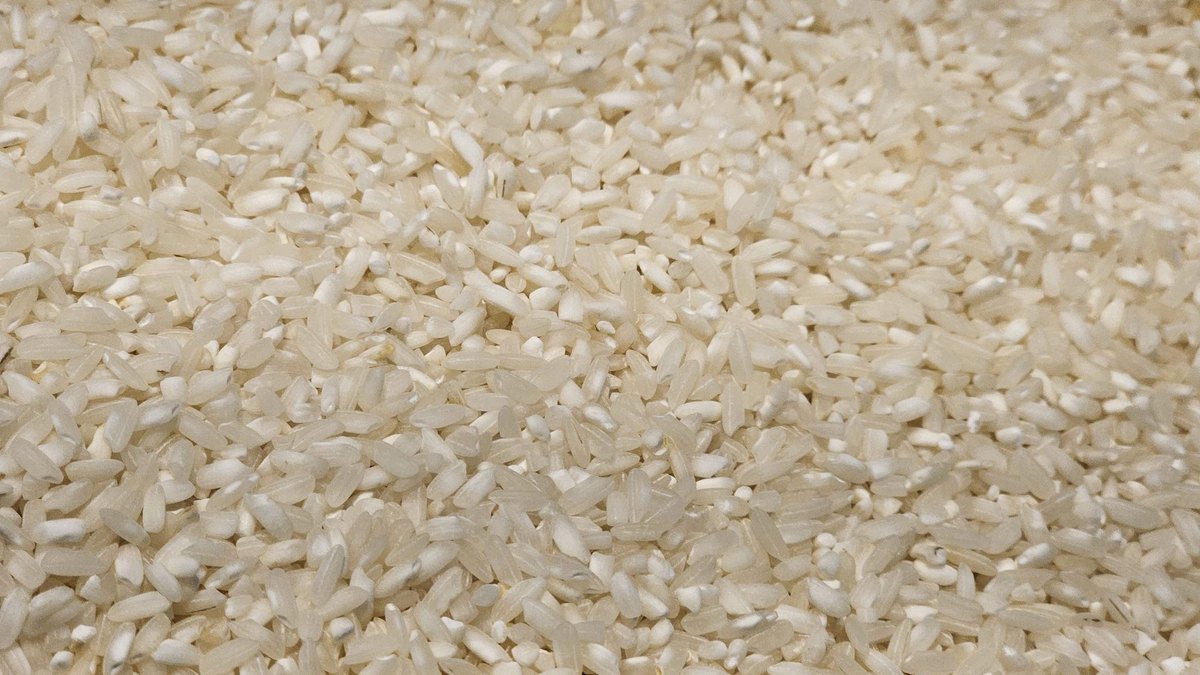
The discovery of thiamine is one of the great detective stories of medicine, and it turns on a grain of rice. Through the nineteenth century, as steam-powered mills spread across Asia, more and more people ate polished white rice — rice with its brown outer bran and germ stripped away. It cooked faster, stored longer and looked cleaner. It had also lost almost all of its thiamine. In its wake came an epidemic of beriberi, and no one knew why.8
Two men, working an ocean apart, closed in on the answer. In the 1880s the Japanese naval physician Kanehiro Takaki6 noticed beriberi ravaged sailors fed almost entirely on white rice. He changed the naval diet — adding barley, meat and vegetables — and the disease all but vanished from the fleet. He credited protein and missed the true cause, but he had proved it was something in the food.
Then, in a military hospital in Java, the Dutch physician Christiaan Eijkman7 stumbled onto a living model. His laboratory chickens, fed leftover polished rice from the wards, developed a nerve disease that looked exactly like beriberi — and it resolved when they were switched back to unmilled rice. Eijkman first guessed the bran neutralised a toxin in the white rice; it took his colleague Gerrit Grijns to read the result the right way round — the bran supplied something essential that milling took away. That "something" was thiamine. Eijkman shared the 1929 Nobel Prize for the work, and the American chemist Robert R. Williams later isolated and synthesised the vitamin outright.9
A whiter, longer-keeping grain quietly deleted a nutrient — and an epidemic followed. It is the oldest lesson in this field: how you process and preserve a substance can matter as much as the substance itself.
7.The stability frontier — where Panacea Bio Chem works
Panacea Bio Chem designs and formulates fragile biomolecules — custom peptides above all — and its interest in thiamine is not the clinical dosing, which belongs to nutrition and medicine. It is the engineering problem the beriberi story already named: a molecule is only useful in the amount that survives to reach the point of use. Thiamine is a textbook case of a fragile active. It is heat-sensitive, alkali-sensitive and readily oxidised10,11 — the same oxidation that turns it into fluorescent thiochrome in the assay also degrades it in a poorly protected product — and it is notoriously destroyed by sulphite and by certain enzymes in raw fish and ferns. Keeping such a molecule intact through manufacture, drying and storage is a real discipline, not an afterthought.
That last mile — preserving a fragile active from synthesis to use — is the sphere Panacea researches, through proprietary methods first built for peptides and biologics:
- Gentle water removal that does not cook or collapse a fragile solid — Cryolapse™, freeze-drying the way nature would → — matters most for heat-labile substances, and thiamine is exactly that.
- Holding a dried product as a stable glass rather than a restless powder — TgShift™, raising the glass-transition ceiling → — slows the molecular motion that ages an active in storage.
- Isolating an oxidation-prone molecule from the oxygen and trace metals that quietly degrade it — RedoxVault™, a vault against oxidation → — speaks directly to a vitamin as easily oxidised as thiamine.
- The custom-synthesis discipline itself — designed, made-to-spec molecules → — where purity and identity are engineered in from the first step rather than corrected later.
The precise formulations, parameters and hardware that make these methods repeatable remain proprietary to Panacea Bio Chem, held by Bogdan Dicoias — the outline is here; the recipe stays behind the door.
8.Potential application fields
Where would careful vitamin-stability engineering — the preservation of a fragile active like thiamine — hit hardest? A few directions where the unmet need is largest, offered as research inspiration rather than finished claims:
- Fortification that survives the shelf — thiamine added to flour, rice and infant formula is only as good as the fraction still present at the end of storage and cooking; loss-resistant forms and matrices matter most where the deficiency risk is highest.
- Parenteral and rescue formulations — stable, ready-to-use thiamine for acute settings, where a degraded or fiddly-to-prepare dose is worst exactly when speed counts.
- Fat-soluble derivative delivery — benfotiamine- and sulbutiamine-type molecules carry their own formulation quirks; the same drying, glass-matrix and anti-oxidation tools built for peptides transfer naturally.
- Fragile actives generally — the preservation problem is not thiamine-specific. It recurs across every heat- and oxidation-sensitive molecule the wider network studies, from vitamins to the peptides and biologics that must survive the journey from synthesiser to point of use.
These are framed as research directions and open questions — inspiration for future work, not claims of completed products.
Frequently asked
What is thiamine (vitamin B1)?
A water-soluble vitamin the body cannot make and must get from food. Its active form, thiamine pyrophosphate, is the coenzyme for several enzymes at the centre of carbohydrate metabolism, so it is essential for turning food into energy and for healthy nerve function. It was the first vitamin discovered — hence the number 1.
What happens in thiamine deficiency?
Because the body stores only a small amount, deficiency can appear within weeks. It causes beriberi — a cardiovascular form with fluid retention, or a nervous form with peripheral neuropathy — and Wernicke-Korsakoff syndrome, a brain disorder classically linked with chronic alcohol use. This is a research explainer; nothing here is medical advice.
How do benfotiamine and sulbutiamine differ from ordinary thiamine?
Plain thiamine is water-soluble, which limits how much crosses fatty membranes. Benfotiamine and sulbutiamine are lipid-soluble derivatives that move across membranes more readily and are converted toward thiamine in the body; benfotiamine has been studied around diabetic complications and sulbutiamine around fatigue.
Trending in the field
Recent developments in the field — refreshed 2026-10-21 by Panacea Bio Chem.
- The Active Component of Dehydrophos Covalently Binds to Acetohydroxyacid Synthase and Inhibits the Growth of Uropathogenic Escherichia coli — PubMed, 2026 Oct 20
- Undertreatment of Wernicke encephalopathy in alcohol-related clinical contexts: a scoping review of diagnosis, thiamine regimens, and clinical management — PubMed, 2026 Oct 20
- Subclinical thiamine deficiency in third-trimester pregnancy despite routine antenatal supplementation: a cross-sectional study in an urban setting, Bangkok, Thailand — PubMed, 2026 Jul 22
- [Association of nutrient patterns with cognitive function among adults aged 55 years and older in four provinces of China] — PubMed, 2026 Oct 6
References & further reading
- Thiamine (vitamin B1) — overview. Wikipedia. Compound entry: PubChem CID 1130.
- Thiamine pyrophosphate (thiamine diphosphate) — the active coenzyme. Wikipedia.
- Beriberi and thiamine-deficiency disorders — clinical review. PubMed.
- Benfotiamine — the fat-soluble thiamine derivative. Wikipedia.
- Thiamine, diuretics and heart failure. PubMed.
- Kanehiro Takaki and the naval-diet experiment on beriberi. Wikipedia.
- Christiaan Eijkman — polished rice, polyneuritis in fowls, and the Nobel-winning discovery of the antineuritic vitamin. NobelPrize.org (1929).
- Carpenter KJ. The discovery of thiamin. Annals of Nutrition and Metabolism, 2012. PubMed.
- Carpenter KJ, Sutherland B. Eijkman's contribution to the discovery of vitamins. The Journal of Nutrition, 1995. PubMed.
- Voelker AL, Miller J, Running CA, Taylor LS, Mauer LJ. Chemical stability and reaction kinetics of two thiamine salts (thiamine mononitrate and thiamine chloride hydrochloride) in solution. Food Research International, 2018. PubMed.
- Voelker AL, Taylor LS, Mauer LJ. Effect of pH and concentration on the chemical stability and reaction kinetics of thiamine mononitrate and thiamine chloride hydrochloride in solution. BMC Chemistry, 2021. PubMed.
- Jain A, Mehta R, Al-Ani M, Hill JA, Winchester DE. Determining the role of thiamine deficiency in systolic heart failure: a meta-analysis and systematic review. Journal of Cardiac Failure, 2015. PubMed.